
Following the Suwannee

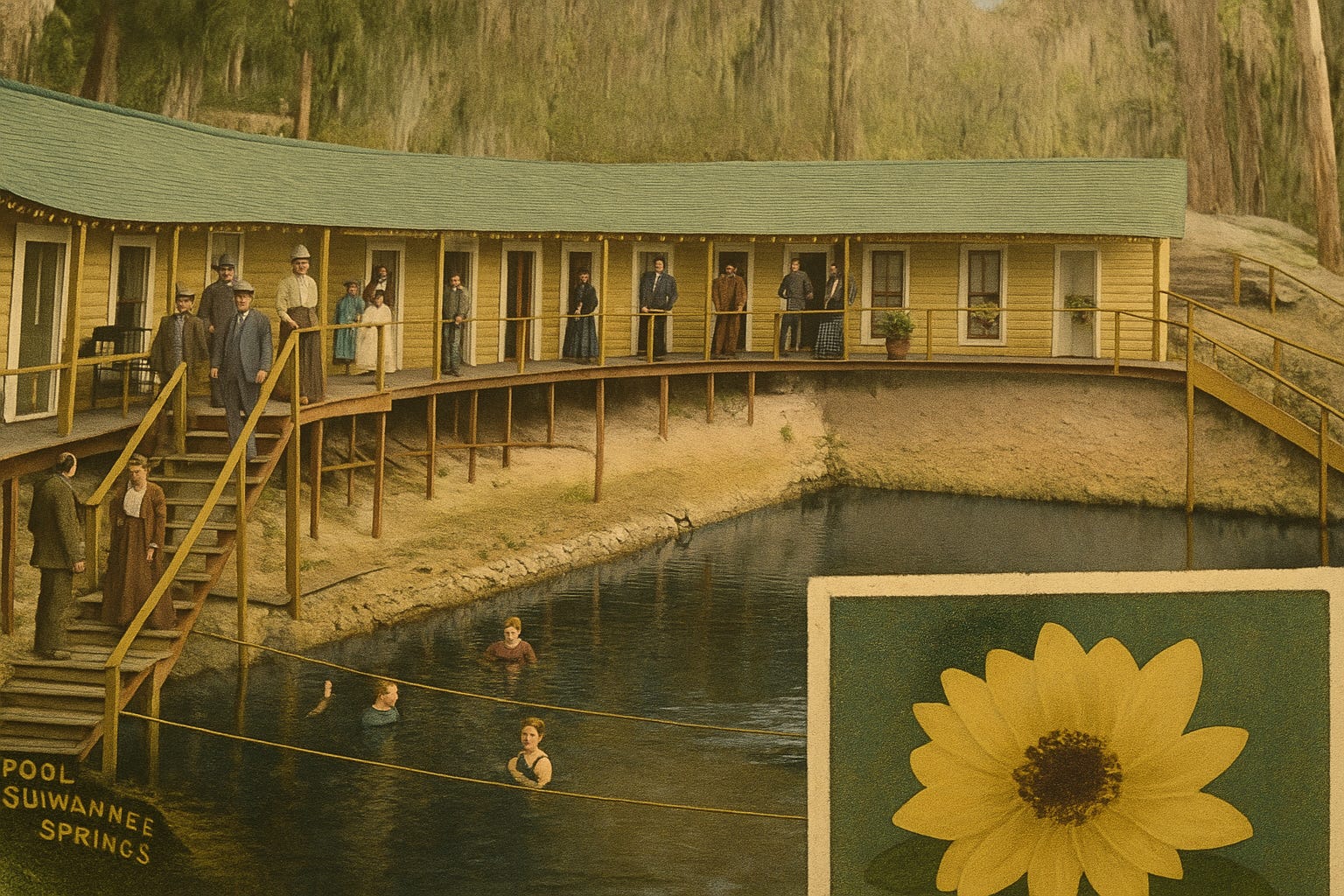
This trip started the best way trips should: no hurry and a mutual willingness to pull over for anything remotely interesting.
Lanying and I followed the Suwannee by road, not river—two-lane blacktop curling west and south like it was drawn by someone who hated straight lines. The river hid most of the time, but you could feel it nearby, shaping the land, cooling the air, tugging the road just enough to keep it curious.
White Springs was our first proper stop, and it still wears its past lightly. A century ago, this was a resort town with ambitions. Trains delivered visitors chasing sulfur water cures and fresh air. There were hotels, bathhouses, music, and steamboats tying up at the docks below. Floods and time had their say, as they always do, but the place hasn’t sulked about it. Now it’s best known for the Stephen Foster Folk Culture Center State Park—a tribute to the man who wrote “Old Folks at Home” and made the Suwannee famous, even though he never actually saw it. The place feels content now—historic without being precious, friendly without trying.
At Suwannee Springs, the optimism of the old resort era is still visible in concrete and brick ruins near the riverbank. Once upon a time, people believed this water could fix just about anything. Arthritis. Nerves. The human condition. The spring itself has quieted down, but wandering the remains is oddly cheerful. You don’t feel sold to. You feel invited to imagine.
We laughed our way through small towns—Live Oak, Branford, Jasper—places shaped by railroads, timber, farming, and seasonal floods. No gift shops pretending to be history. Just courthouses, cafes, old storefronts, and the sense that life here continues whether anyone’s watching or not.
Then the Suwannee decided to show off.
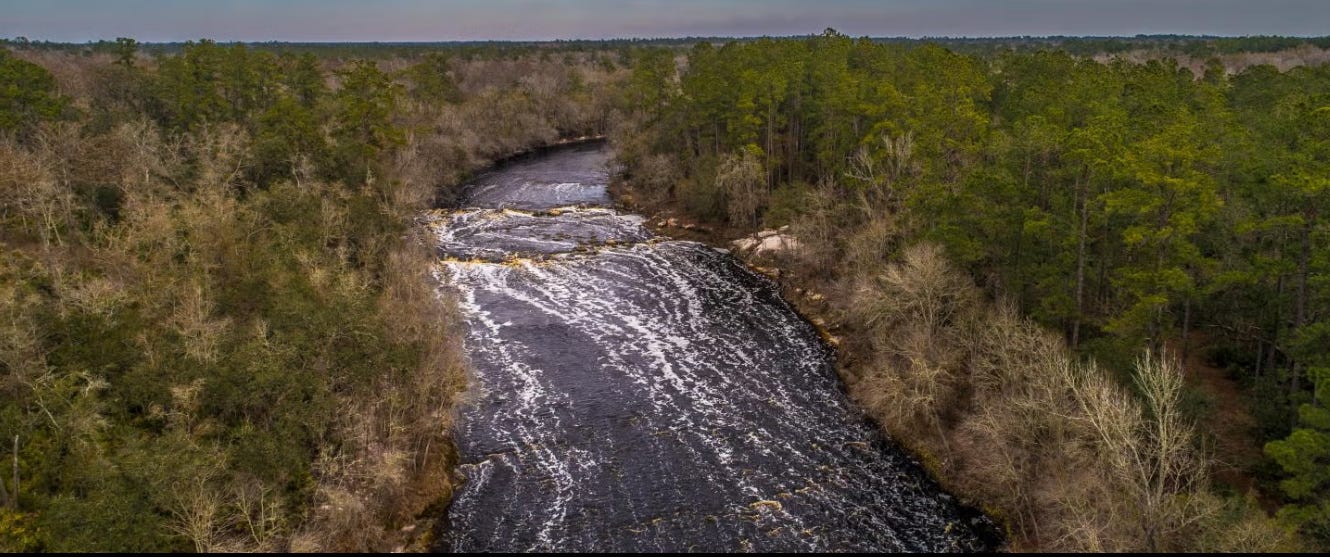
At Big Shoals State Park, it narrows, drops, and suddenly sounds like it means business. Florida’s only Class III rapids. Real movement. Real noise. We stood there grinning like fools, delighted that this calm, dark river had a wild streak it kept in reserve. It felt like a shared joke.
Between stops, the drive itself became part of the fun. Windows down. Spontaneous detours. “What’s down there?” followed immediately by turning the wheel. Conversation bounced from history to nonsense and back again. Sometimes we just pointed things out to each other like kids who’d discovered the world five minutes ago.
The Hyundai Ioniq 6 did its job quietly and politely, which was exactly what we wanted. It never tried to be the story. It just let us chase it.
By the time the land flattened and the river began thinking seriously about becoming the Gulf, we were sun-warmed, road-dusty, and ridiculously happy. The Suwannee hadn’t performed for us. It didn’t need to. It just let us wander alongside its history, its ruins, its surprises—and somehow that was more fun than anything staged.
That’s the kind of adventure that sticks. Not because it was epic. Because it smiled back.
When my husband came home from work one day and asked “Can I quit?” I said “ Yes. Why?” Simple answer was “Burnout.” That’s when I suggested we get an RV and take weekend jaunts, to just get away and come back with a fresh outlook on Mondays. It really worked.
Love this 🥰